
CELLTUNE
773 성분검사 최대 50가지 유기원료
셀튠랩스는 실험과 증명 통해 신뢰를 얻습니다.
국제 기준 81가지 세부 영양
필수 및 일반 지방산
18종 충족
필수 및 일반 아미노산
20종 충족
미네랄
14종 충족
비타민
13종 충족
대한민국 사료관리법, 미국 식품안전 현대화 법(FSMA), AOAC 분석 기준 81가지 영양을 설계하였습니다.
AAFCO 미국 사료 협회 공식 기준 Association of American Feed Control Officials
FEDIAF 유럽 반려동물 산업 연합 The European Pet Food Industry Federation
NRC 미국 국가 연구 위원회 The National Research Council’s
미국 AAFCO CHAPTER 4 Regulation Expression of Nutritional information
"VIII. The term 'mineralized' shall not be used in the name of a feed except for 'TRACE MINERALIZED SALT.' When so used, the product must contain significant amounts of trace minerals which are recognized as essential for animal nutrition."
위 규정 참조 동물 영양에 필수적인 것으로 인정되는 미네랄을 첨가하였습니다. 품목별 기준치에 맞춰 첨가하였습니다.
유럽 FEDIAF 3. FEDIAF Complete Pet Food 3.1. GUIDANCE
"When a complete pet food is fed for an extended period (i.e. covering the whole period of the life stage) as the only source of nutrients, it will provide all the nutritional needs of the particular animals of the given species and physiological state for which it is intended."
위 지침을 참조하여 반려동물의 영양적 필요를 충분히 충족할 수 있도록 설계하였으며, 제조 과정에 이를 반영하였습니다.
아미노산
단백질은 세포를 구성하고 면역력 건강을 지켜줍니다. 단백질 구성 성분인 아미노산은 체내 합성이 어려워 별도 섭취가 필요한 필수 아미노산, 체내 합성 되는 비필수 아미노산으로 구분 되며 셀튠 랩스는 모든 아미노산의 항목별 영양 정보를 제공 합니다.
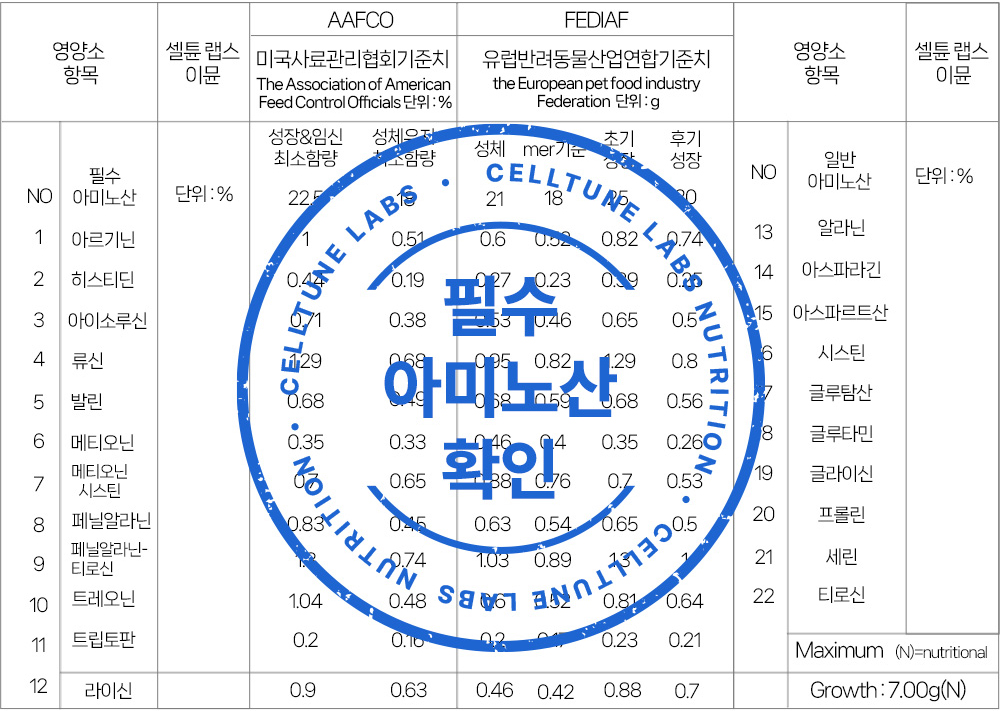
미국 AAFCO CHAPTER 4 Regulation Expression of Nutritional information
Recommended concentrations for maintenance of body weight at an average caloric intake for dogs of a given optimum
위 규정 참조 최적 칼로리 섭취량에서 체중 유지를 위해 권장되는 농도 설계 되었습니다.
유럽 3.3. FEDIAF SUBSTANTIATION OF NUTRIENT RECOMMENDATION TABLES FOR COMPLETE DOG FOOD
Total protein (Reproduction) The recommendation for protein assumes the diet contains some carbohydrate to decrease the risk of hypoglycaemia in the bitch and neonatal mortality. If carbohydrate is absent or at a very low level, the protein requirement is much higher, and may be double (Kienzle E et al. 1985, Kienzle E et al. 1989, Romsos DR et al. 1981). Total protein (Growth) For practical foods made from cereals and various animal by-products, the crude protein level needed for maximum nitrogen retention appears to be about 25 per cent dry matter for newly weaned puppies, whereas for puppies over 14 weeks of age it is 20 % dry matter (NRC 2006d).
위 규정 참조 총 단백질 권장량은 펫푸드에 탄수화물이 일부 포함되어 있다는 가정하에 설계, 성장기 조단백질 함량은 갓 젖을 뗀 강아지의 경우 약 25%, 생후 14주가 넘은 강아지의 경우 건물 20%로 이에 맞추어 설계하였습니다.
유럽 FEDIAF 3.3.1. Substantiation of nutrient recommendations for complete dog food GENERAL protein
Arginine (All life stages) The arginine requirement increases with increased protein content owing to its role as an intermediate in the urea cycle. For every gram of crude protein above the stated values, an additional 0.01 g of arginine is required (NRC 2006g). See ANNEX 7.4.
위 규정 참조 아르기닌(모든 생애 단계) 은 요소 회로의 중간체 역할로, 단백질 함량 증가 따라 필요량이 증가하므로 적정량 설계하였습니다.
Lysine (nutritional maximum for puppies) It was concluded that the highest no-effect-level of lysine for puppies was 2.91 % DM (energy density 4156 kcal/kg or 17.39 MJ/kg). This is equivalent to 7.0 g/1000 kcal (1.67 g/ MJ) or 2.8 % DM (at 4 kcal/g DM) and this is therefore the FEDIAF maximum for puppy growth.
위 규정 참조 과량의 라이신(기초 사료 0.91% + 보충제 4%)이 강아지의 체중 증가를 감소시킬 수 있어 적정량 2.91% DM을 최대치로 설계했습니다.
유럽 FEDIAF 3.3. FEDIAF SUBSTANTIATION OF NUTRIENT RECOMMENDATION TABLES FOR COMPLETE DOG FOOD
Methionine-Cystine The recommended values are based on a dog food containing a very low taurine content, i.e. <100 mg/kg dry matter (Sanderson SL et al. 2001). For products containing higher levels of taurine the RA for sulphur amino acids can be lower than the values quoted in the table. For further information see taurine section ANNEX 7.3.
위 규정 참조 메티오닌-시스틴(성견) 권장량을 타우린 함량을 고려하여 설계했습니다.
Tyrosine (All life stages) For maximisation of black hair colour, the tyrosine content may need to be 1.5 to 2 times higher than the amount stated (Biourge V et al. 2002, NRC 2006g).
위 규정을 참조로 티로신 함량을 설계 했습니다.
인체와 강아지의 필수 아미노산 차이
인체는 아이소류신, 라이신, 류신, 메티오닌 트레오닌, 트립토판, 발린의 필수 아미노산이 필요하지만 강아지는 아르기닌, 고양이는 아르기닌과 타우린이 추가로 필요 합니다. 아미노산 부족 시 단백질 합성에 지장이 있을 수 있습니다. 셀튠은 22가지의 아미노산 성분의 최적 조합을 설계 합니다.
필수 지방산
필수 지방산은 음식을 통해 보충이 필요하며 면역과 생명유지에 매우 중요합니다.
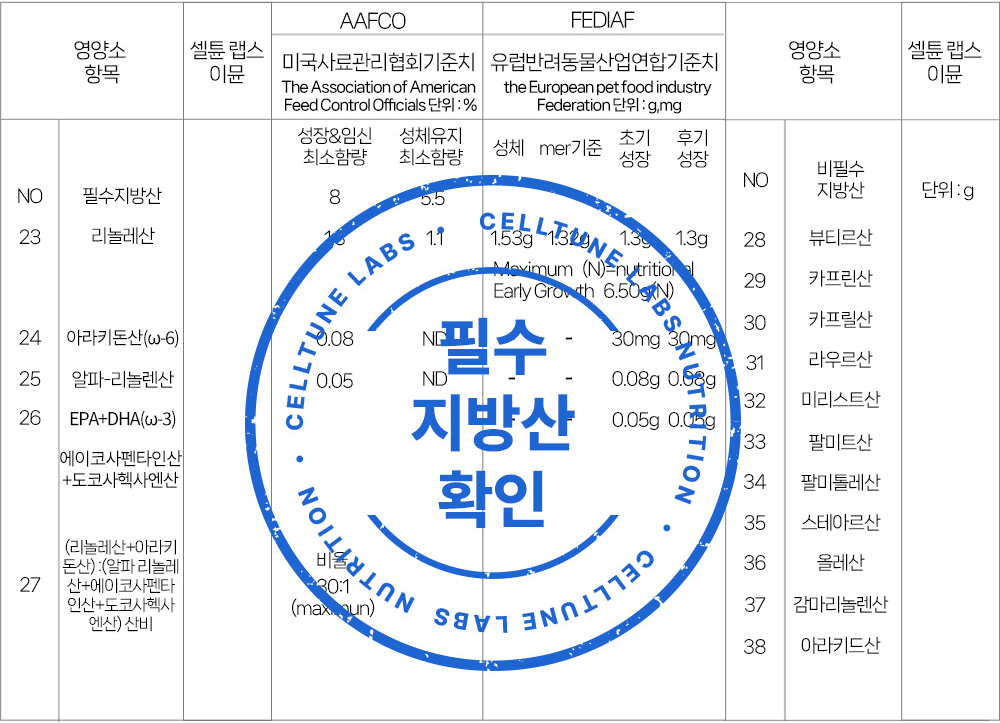
알파 리놀레산은 식물성 오메가3로
액상 아마씨유 등 보충 됩니다.
EPA-DHA는 생선 해조류에 풍부한 오메가3로
액상 연어오일 등 보충됩니다.
미국 AAFCO CHAPTER 4 Regulation Expression of Nutritional information
although a true requirment for crude fat per se has not been established the minimum concentration was based on recognition of crude fat as a source of essential fatty acids, as a carrier of fat-soluble vitamins to enhance palatability and to supply an adequate caloric density.
위 규정 참조 조지방 최소 농도는 필수 지방산의 공급원 및 맛 향상 적절 열량 밀도를 공급하는 지용성 비타민의 운반체로 인식하는 데 기초했습니다.
cnd= not deternubed although a minimum requriment has not been determined, sufficient amounts of omega-3 fatty acids are necessary to meet the maximum omega-6:omega-3 fatty acid retion.
위 규정 참조 최대 오메가-6:오메가-3 지방산 비율을 충족 위해 오메가-3 함량을 설계했습니다.
유럽 FEDIAF 3.3.1. Substantiation of nutrient recommendations for complete dog food -FAT
Total fat (All life stages) Dogs fed foods containing normal levels of protein may tolerate very high levels of fat (e.g. sled dogs). However very high fat foods with very low protein content have been linked with adverse effects in dogs, mainly pancreatitis, as reviewed by NRC (2006j); more studies are needed to assess effects of high fat in complete maintenance diets.
위 규정 참조 단백질 함량이 매우 낮으면서 지방 함량이 매우 높은 사료는 개에게 부작용, 특히 췌장염과 관련이 있을 수 있어 주의 깊게 설계했습니다.
유럽 FEDIAF Omega-3 and Omega-6 poly-unsaturated long chain fatty acids (Growth & Reproduction)
During gestation and early life after birth, DHA and arachidonic acid (AA) are selectively accumulated within the brain and retina (Heinemann KM et al. 2006). Supplementation with α-linolenic acid (ALA) and linoleic acid during gestation and lactation is an ineffective means of increasing the milk content of DHA and AA respectively (Bauer JE et al. 2004). Although very young puppies have the capacity to convert some ALA into DHA, after weaning puppies lose this capacity (Bauer JE et al. 2006a). Moreover, electroretinograms have revealed improved vision in puppies from mothers fed omega-3 long chain poly-unsaturated fatty acids and fed the same food after weaning (Bauer JE et al. 2006b, Heinemann KM et al. 2005a, Heinemann KM et al. 2005b). Consequently it is preferable to have small amounts of DHA and/or EPA, as well as AA in foods for growth and reproduction to supply enough for neonatal nutritional modifications.
위 규정 참조 오메가-3 및 오메가-6 다중불포화 장쇄 지방산 함량을 연령에 따라 설계했습니다. (참고) 망막 전위 검사 결과, 오메가-3 장쇄 다중불포화지방산을 섭취한 어미 견과 이유 후 동일한 사료를 섭취한 어미 견의 강아지에서 시력이 향상된 것으로 나타났습니다.
유럽 FEDIAF Omega-3 vs. 6 FA (Adult dogs)
The effects of omega-3 fatty acids depend on the level as well as on the ratio of omega-6 to omega-3 fatty acids. Very high levels of long chain omega-3 fatty acids can decrease cellular immunity, particularly in the presence of a low level of omega-6 fatty acids (Hall JA et al. 1999, Wander RCet al. 1997).
위 규정 참조 오메가-3 대 6 지방산(성견) 오메가-3 지방산의 영향은 오메가-6 대 오메가-3 지방산의 함량과 비율을 정교하게 설계하였습니다.
강아지에게 꼭 필요한 필수 지방산
오메가6 계열(리놀레산과 아라키돈산), 오메가3 계열(알파 리놀렌산, EPA, DHA) 등이 필요합니다.
비타민
비타민은 생명 유지 필수 영양이며 에너지 대사 면역, 생리 활성을 돕습니다.
지용성 비타민 (A, D, E, K)
지용성 비타민은 지방에 용해되며 체내에 저장되어 생리 기능을 조절합니다.
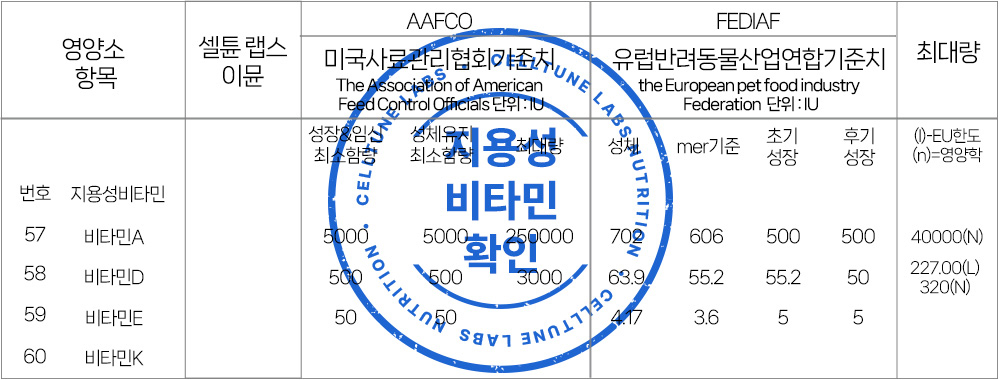
미국 AAFCO CHAPTER 4 Regulation Expression of Nutritional information
It is recommended that the ratio of IU of vitamin E to grams of polyunsaturated fatty acids (PUFA) be > 0.6:1 a diet containin g 50 IU of vitamin E will have a ration > 0.6 :1 when the PUFA contain an additional 0.6 IU of vitamin E for every gram of PUFA Because processing may destroy up to 90% of thiamine in the diet allowances in formulation should be made to ensure t he minimum nutrient concentration thiamine is met after processing .
위 규정 참조 비타민 E와 다중불포화지방산 비율이 0.6:1 이상이 되도록 설계했습니다. 또한 가공 과정에서 파괴율이 높은 비타민 B1(티아민)의 최소 농도를 충족하도록 설계했습니다.
유럽 FEDIAF 3.3.1. Substantiation of nutrient recommendations for complete dog food GENERAL VITAMINS
Vitamin A The FEDIAF maximum is based on the studies reported by Hathcock JN et al. (1990), Goldy GG et al. (1996) a nd Cline JL et al. (1997) in adult dogs. The value is 80 % of the dose that Goldy GG et al. (1996) identified “as may be ap proaching a level that challenges the dog’s ability to maintain normal vitamin A homeostasis” and about 45 % of the n o-adverse-effect intake established by Cline JL et al. (1997) over one year (no detrimental effects on bone health) Furt hermore Hathcock JN et al. (1990) reported an intake at least three times the FEDIAF nutritional maximum as safe in a dult dogs fed for ten months (body growth and haematological indices unaffected). In view of these data the FEDIAF maximum is considered appropriate for all life stages.
위 규정을 참조하여 비타민 A를 영양적 효율과 안전성을 모두 고려하여 정밀 설계했습니다.
유럽 FEDIAF 3.3.1. Substantiation of nutrient recommendations for complete dog food GENERAL VITAMINS
Vitamin D Studies in Great Dane puppies showed that a dietary vitamin D level of 435 IU/100 g DM can affect Ca absorption and may stimulate endochondral ossification disturbances (Tryfonidou MA et al. 2002a, Tryfonidou MA et al. 2002b). Therefore, 320 IU per 100 g DM should be the nutritional maximum for growing giant breed dogs (NRC 2006l). Based on differences in choleca lciferol metabolism between giant breed and small breed puppies (Tryfonidou MA et al. 2002b), 425 IU/100 g DM can be consid ered a safe nutritional maximum for small breed puppies. Since there is no information on maximum safe intakes for adult dog s and breeding bitches, FEDIAF recommends the same nutritional maximum for other life stages as those indicated for puppes. Vitamin E Vitamin E requirements depend on the intake of polyunsaturated fatty acids (PUFA) and the presence of other antioxidants. An increased level of vitamin E may be required if the intake of PUFA is high, particularly from fish oil (Hall J A 1996, Hall JA et al. 2003, Hendriks WH et al. 2002). B Vitamins The recommended minimum of B Vitamins corresponds to NRC (2006i). Adequate Intake (AI) based on bioavailable forms coming from a vitamin premix at the point of consump tion. When no AI level has been identified (and for Vitamin B1), the recommended minimum was based on the NRC Rec ommended Allowance.
위 규정 참조 1. 지나친 비타민D 섭취는 대형견의 칼슘 흡수 및 관절 건강에 무리가 될 수 있어 적정치를 설계했습니다. 2. 비타민E는 다중불포화 지방산과 항산화 영양을 고려했으며 3. 비타민 B는 생체 이용률을 고려하여 설계했습니다.
미국 AFFCO CHAPTER 5 Required Warning and Caution Statements on Medicated Feed Labels
Deficiencies may result from inadequate vitamin K in the diet, disruption of microbial synthesis within the gut (e.g., antibioti c use), inadequate absorption from the intestine, ingestion of vitamin K antagonists (substances that counteract the effect o f vitamin K), or the inability of the liver to utilize available vitamin K. In many species, under normal health conditions endog enous synthesis of vitamin K is sufficient to meet metabolic needs without the requirement for a dietary source. However, in addition to medical conditions and/or use of therapeutic agents that may result in impaired synthesis, absorption or utiliza tion of vitamin K, acquired vitamin K deficiencies may also occur due to other dietary factors. For example, cats fed comme rcial canned diets high in salmon or tuna were found to suffer prolonged coagulation times, gastrointestinal and hepatic he morrhages and death (Strieker et al., 1996). However, these signs were not observed when the animals were given supplem ental phylloquinone (vitamin K1). High dietary intake of sources of long-chain omega-3 fatty acids may also result in signs of vitamin K deficiency (Mameesh and Johnson, 1959; Saker et al., 1998). Because other fat-soluble vitamins may compete an d hence interfere with vitamin K absorption, the addition of high levels of tocopherols to retard oxidation (for either preserva tive or nutritional reasons) in the food may be an aggravating factor in the development of a vitamin K deficiency. Vitamin K is generally known to exist in three forms, two of them are naturally occurring and one is a synthetic analogue which can be found naturally on normal Vitamin K metabolic pathways:It is also noted that menadione, the synthetic vitamin K usually u sed in animal feed, can be added up to levels as high as 1,000 times the dietary requirement without seeing any adverse eff ects in animals, except when used parentally in horses. Vitamin K and the vitamin K active substances serve important roles in providing an essential nutrient in animal diets. The expert panel recommended that Menadione Sodium Bisulfite Compl ex may be used as a safe and suitable source of Vitamin K activity in the food for all animals in the United States in accordan ce with good manufacturing and feeding practices.
위 규정 참조 오메가3 함량과 비타민 K (메나디온 중아황산나트륨)의 상관관계를 유의하여 안전하게 설계하였습니다.
수용성 비타민 (C, B-Complex)
수용성 비타민은 물에 용해되며 비타민C와 B1, B2, B3, B5, B6, B7, B9, B12가 해당 됩니다.
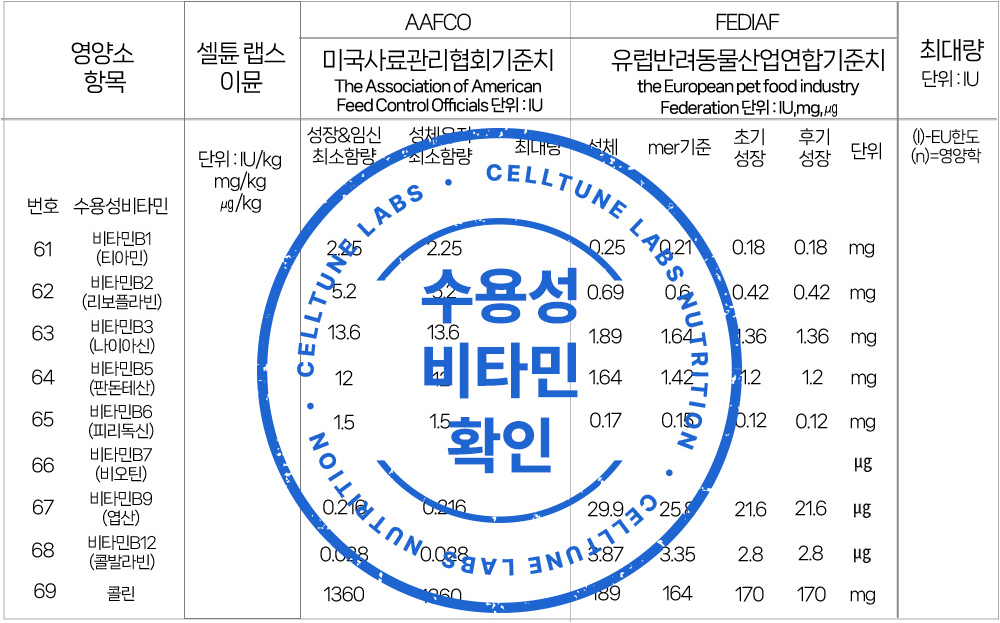
인체와 강아지의 수용성 비타민 필요도 차이
강아지는 신체 내에서 비타민C를 자체적으로 생산할 수 있는 점에서 인체와 차이가 있습니다. 셀튠은 수용성 비타민 최적 권장 기준에 맞춰 제품을 설계하고 엄격히 검증합니다.
미네랄
미네랄은 체내 효소 작용 및 대사 과정 조절, 신경 전달, 골격 형성 등 구조 형성에 매우 중요한 영양소입니다.
필요량에 따라 다량 광물질(Macro Mineral)과 미량 광물질(Trace Mineral)로 분류됩니다.
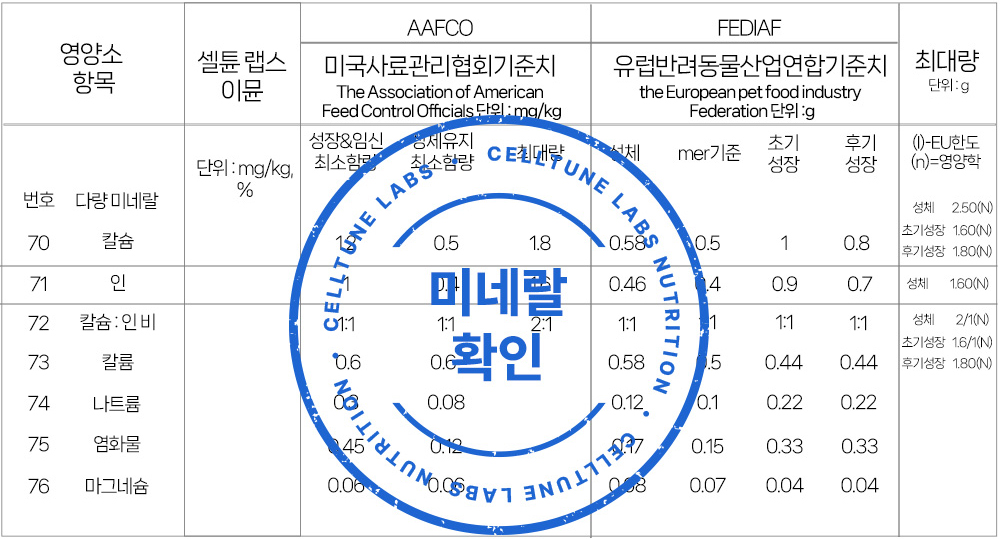
다량 & 미량 미네랄
다량 미네랄은 뼈의 주요 구성 성분으로 골격을 형성하거나 신체 대사에 꼭 필요합니다. 미량 미네랄은 체내 요구량은 적지만 체내 대사에 관여하여 중요하기 때문에 정밀한 영양 관리가 필요합니다.
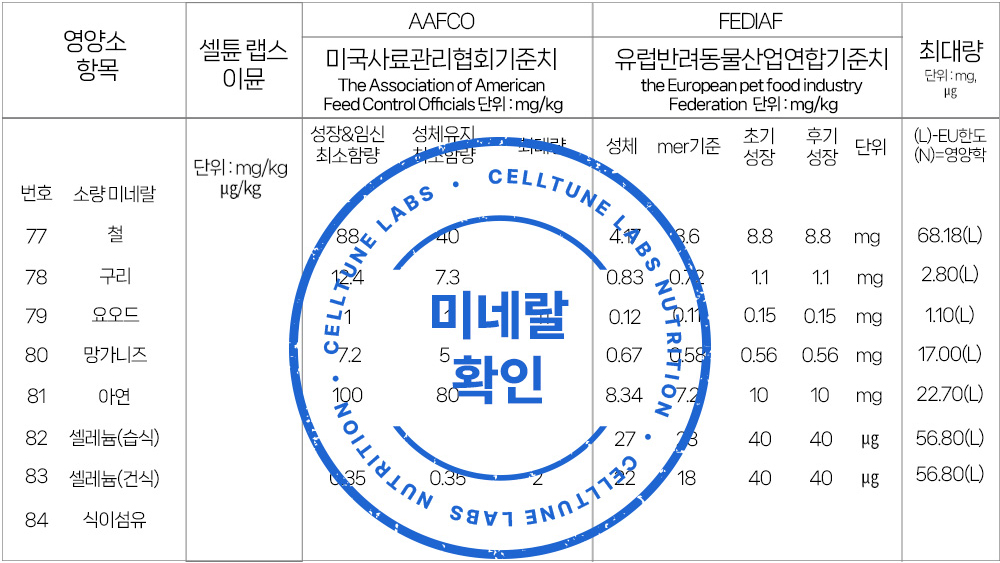
유럽 FEDIAF 3.3.1. Substantiation of nutrient recommendations for complete dog food GENERAL MINERALS
Calcium (Adult dogs) As the calcium level approaches the stated nutritional maximum, it may be necessary to increase the le vels of certain trace elements such as zinc and copper. Calcium (RA for puppies) A calcium level of 0.8 g/ 100 g DM has been s hown to be adequate for growing dogs (Goodman SA et al. 1998, Jenkins KJ et al. 1960a, Jenkins KJ et al. 1960b, Lauten SD et al. 2002). However, this level has been reported to be marginal for some breeds (Alexander JE et al. 1988) particularly during t he fast growing phase (particularly breeds with lower energy requirements) (Laflamme DP 2001). After comparing all the data , FEDIAF recommends that the calcium level in a pet food for early growth should be at least 1 g/100 g DM. During late growth, it is recommended that large breed and giant breed puppies continue to be fed a pet food containing at least 1 % of calcium until about 6 months of age. During the whole late growth phase, pet foods for puppies of small and medium size breeds ma y contain less calcium (minimum 0.8 % DM) and the calcium-phosphorus ratio can be increased to 1.8/1. Calcium (Maximu m for puppies) High intake of calcium has an adverse effect on skeletal development in large breed dogs, particularly during t he early growth phase (Hazewinkel HAW et al. 1985, Schoenmakers I et al. 2000). Therefore a strict nutritional maximum is rec ommended for foods intended for large breed puppies. Weber et al. (2000a, b) showed that when feeding a balanced food, a calcium level of 1.6 % DM from 9 weeks of age does not cause side effects. During later growth up to 1.8 % DM can be fed to al l breed dogs including giant breeds with the exception of great Danes. This breed may be more susceptible and it is preferabl e to continue with a food containing a maximum calcium content of 1.6% (Laflamme DP 2001, Weber M et al. 2000a, Weber M et al. 2000b).
위 규정 참조 강아지의 나이에 따라 아연 구리와의 관계 및 적정량을 고려 하였으며 대형견에게 지나친 칼슘 급여는 해로울 수 있는 점을 고려 하여 설계하였습니다. 또한 안전 급여를 위해 칼슘 인의 섭취 상한선을 고려 하여 설계하였습니다.
유럽 FEDIAF 3.3.1. Substantiation of nutrient recommendations for complete dog food GENERAL - TRACE ELEMENTS
Copper Owing to its low availability copper oxide should not be considered as a copper source (Fascetti AJ et al. 1998). Io dine From studies by Castillo et al. (2001a, b) low nutritional maximum for iodine in dogs (0.4 mg/100 g DM) was recomm ended. However in these studies puppies were significantly overfed (approx. 75 % above energy requirement) which res ulted in a substantially increased intake of iodine. Furthermore the food was deficient in a number of key nutrients, e.g. C a, P and K, and therefore inappropriate for puppies. Consequently, these results are irrelevant for normal commercial nut ritionally balanced foods, and the existing legal maximum is safe for all dogs. Iron Because of very poor availability, iron fr om oxide or carbonate salts that are added to the diet should not be considered sources contributing to the minimum n utrient level (NRC 2006a). In addition, the amount of inert iron is not to be taken into consideration for the calculation of t he total iron content of the feed for EU legal maximum.Selenium (Growth) The minimum requirement for selenium in gr owing puppies has been determined at 0.21 mg per kg dry matter (Wedekind K and Combs Jr GE 2000, Wedekind KJ et a l. 2004). However, a safety margin has to be added because the availability of selenium in pet food may be low (Wedekin d KJ et al. 1998, Wedekind K and Combs Jr GE 2000, Wedekind KJ et al. 2004). Selenium (Adult dogs) There are no data a vailable about the exact requirements for selenium of adult dogs. However, according to experts the availability of and re quirement for selenium in dogs are similar to those in the cat. Therefore, the recommended allowance for cats is used fo r dogs until more information becomes available. Zinc (Growth) Based on a study with a purified diet, 5 mg zinc per 100 g DM is sufficient to meet the requirements for growing puppies (Booles D et al. 1991). Considering potential factors pres ent in practical pet foods that could decrease zinc availability, doubling the minimum recommended level may be consi dered safe.
위 규정을 참조 하여 1. 철과 구리의 공급원에서 산화철, 탄산염, 산화구리를 제외 2. 요오드 과다 섭취를 방지하도록 설계 3. 셀레늄은 안전 허용 한계를 고려하여 적용 4. 아연은 미네랄 간 길항 작용 등 상호작용 반영하여 균형 있게 설계하였습니다.
국제 기준 692가지 안전 확인
셀튠 랩스는 원료 입고부터 제조, 출하까지 전 과정에 걸쳐 글로벌 표준의 엄격한 안전성 평가를 실시합니다.
잔류 농약, 항생제, 중금속 등 692가지 유해 성분에 대한 정밀 검사를 통해 완벽한 안전성을 입증했습니다.

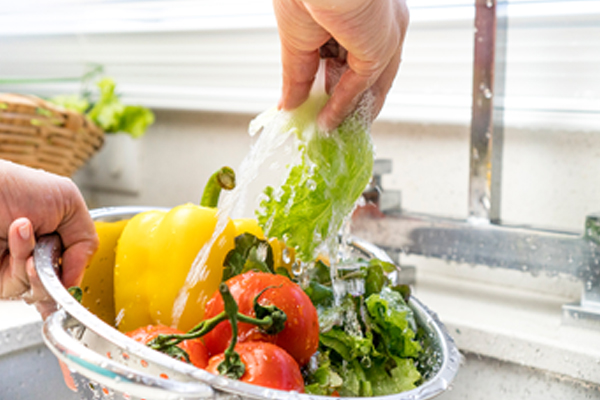
잔류 농약 510안전
잔류 농약 불검출 확인 완료
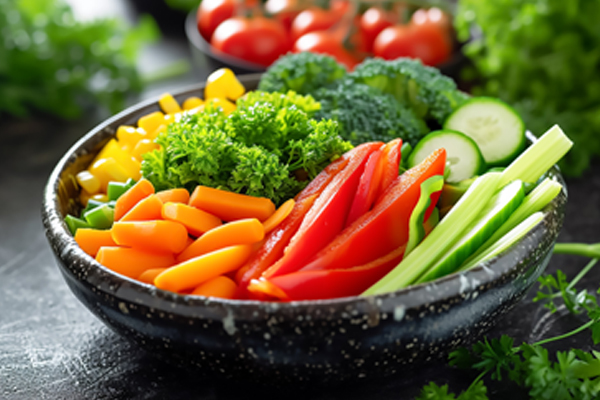
금지 항생제 148안전
항생제 안전 확인 완료
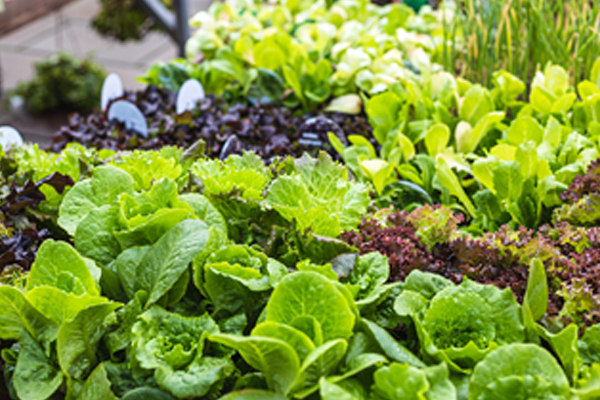
유해 세균 7종
유해 세균 불검출 확인 완료
곰팡이 독소 11안전
곰팡이 독소 안전 확인 완료
방부제 5안전
방부제 안전 확인 완료
중금속 4안전
중금속 안전 완료
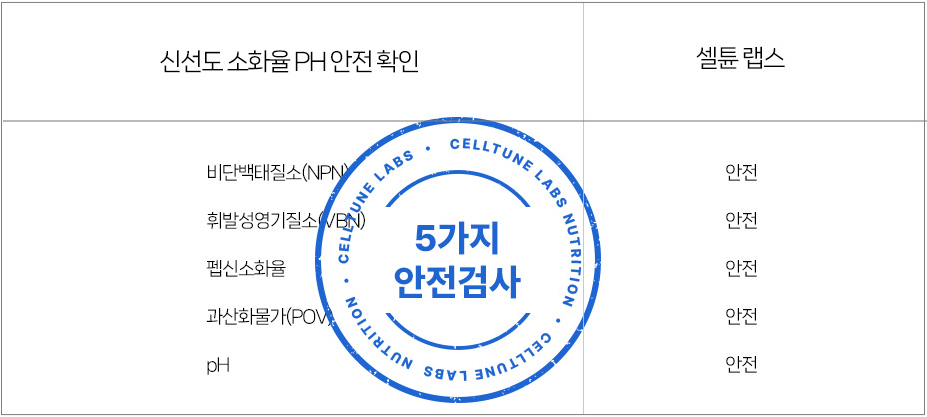
신선도 2안전
신선도 확인 완료
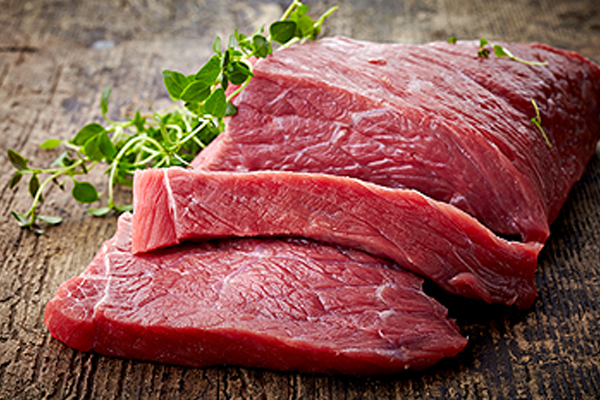
단백질 품질 안전
가수분해단백질
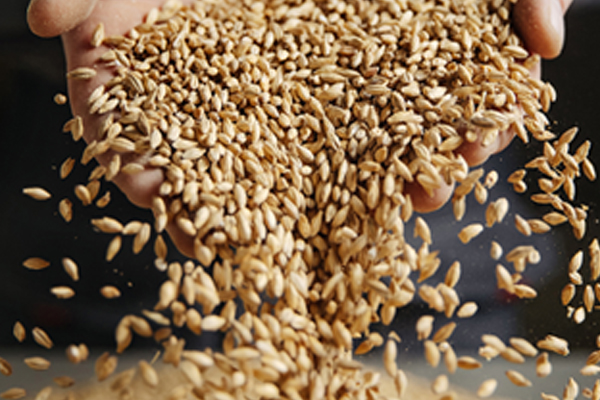
소화 흡수 안전
소화 흡수율 확인 완료
잔류 농약 등 검사 안전 확인
셀튠 랩스는 510항목의 잔류 농약 등 검사로 안전을 확인하였습니다.
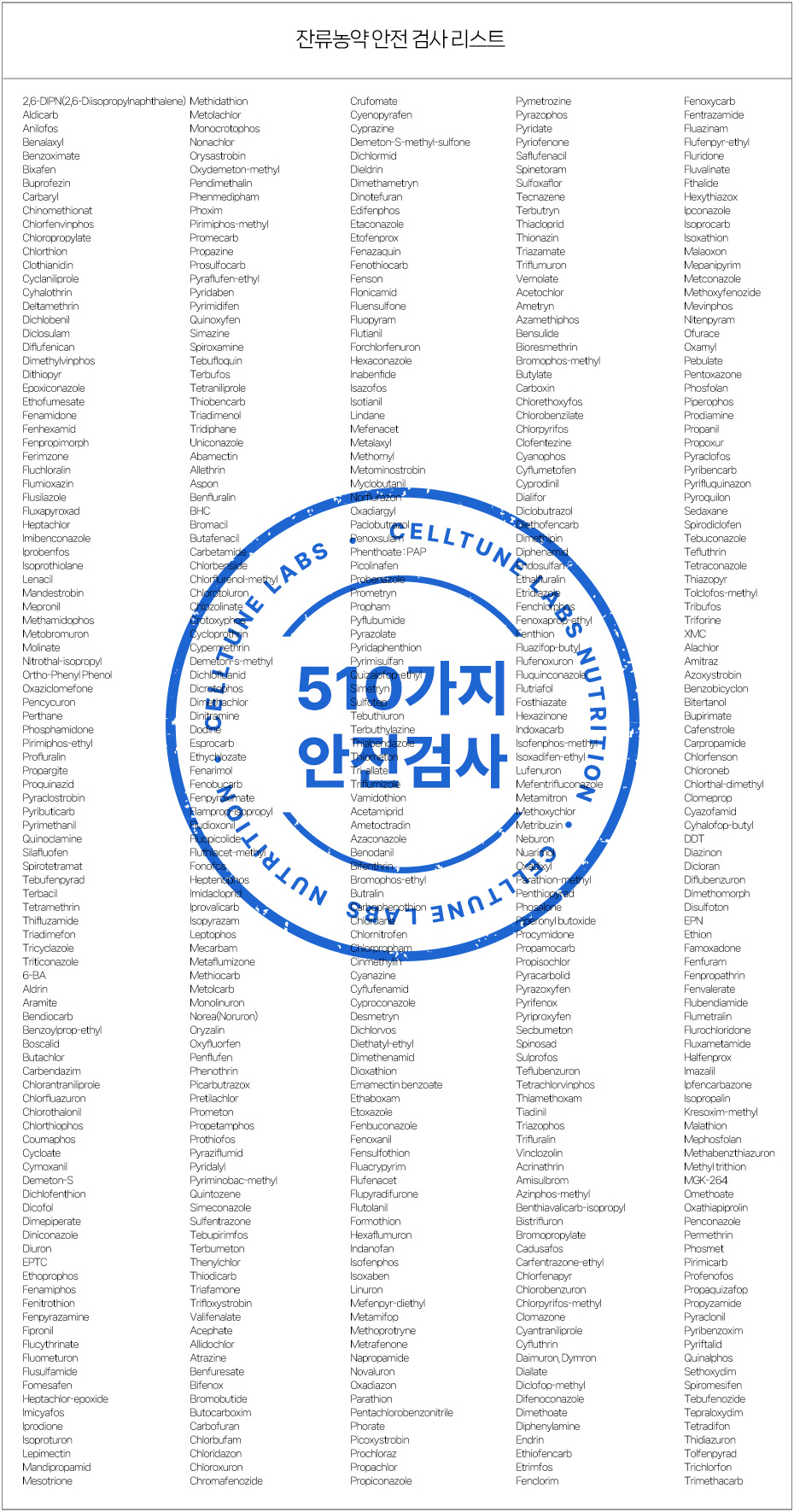
잔류 농약 등 검사 이유
- 2007년 중국 멜라민 첨가 사료의 수출로 피해 사례가 있었습니다.
- 미국에서 발암물질인 다이옥신 비소가 포함 사료 문제가 보고된 바 있습니다.
금지 항생제 검사 안전 확인
셀튠 랩스는 148항목의 금지 항생제 검사로 안전을 확인하였습니다.
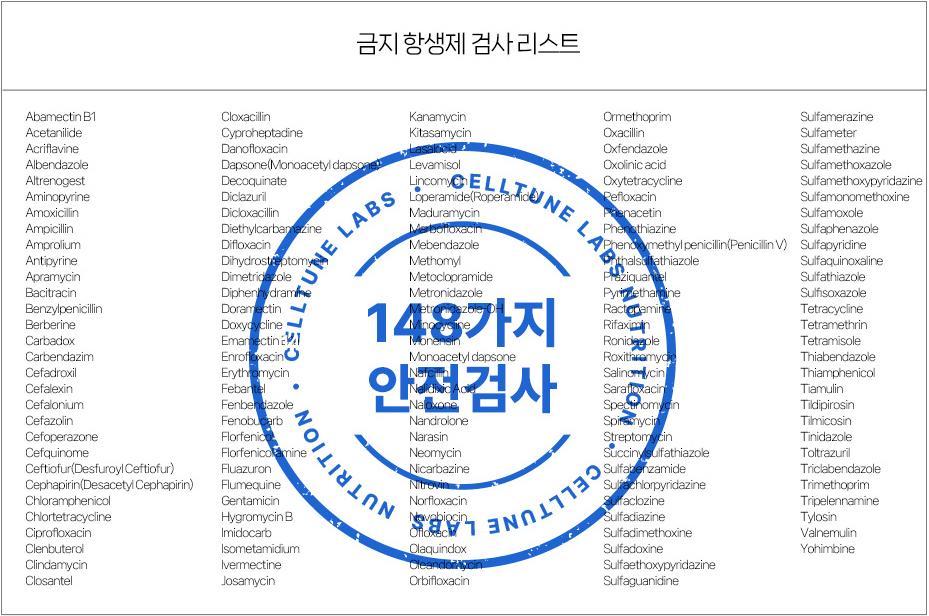
금지 항생제 검사 필요 이유
- 항생제 남용은 내성균 유발, 건강 문제 초래할 수 있어 전면 금지 되고 있습니다.
- 금지 항생제 포함 사료가 반려동물 건강 문제를 일으킨 바 있습니다.
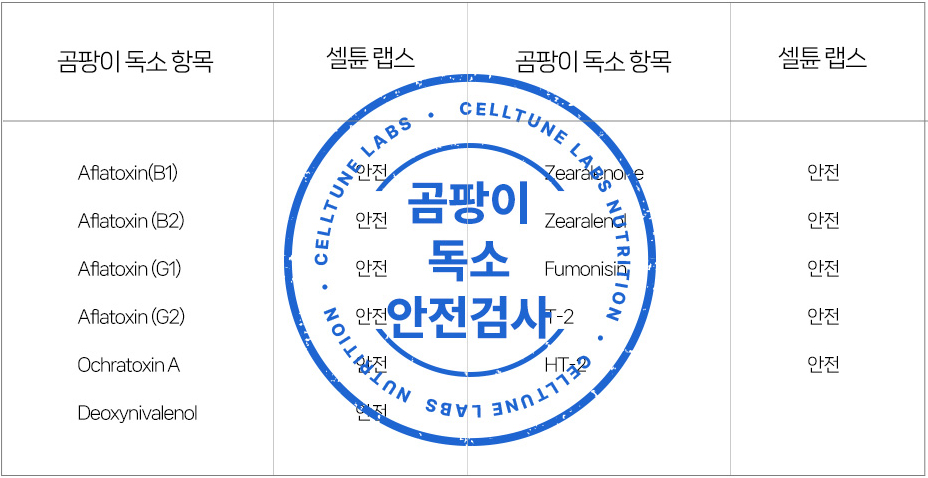
곰팡이 독소 안전 확인
셀튠 랩스는 11항목의 곰팡이 독소 검사로 안전을 확인하였습니다.
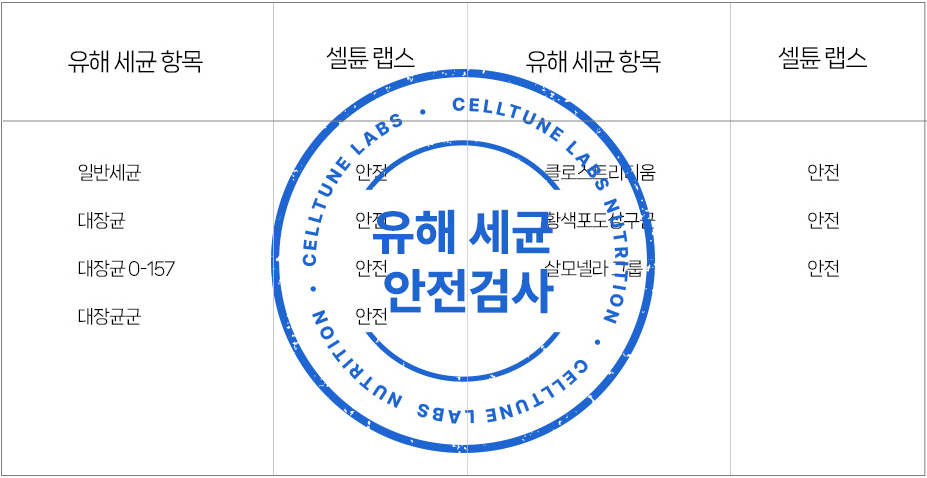
유해 세균 안전 확인
셀튠 랩스는 7항목의 유해 세균 검사로 안전을 확인하였습니다.
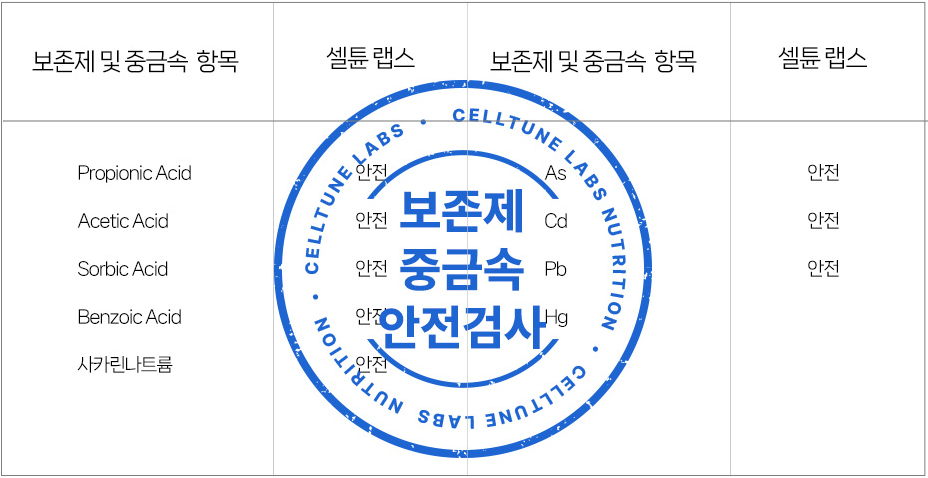
보존제 및 중금속 안전확인
셀튠 랩스는 9항목의 보존제 및 중금속 검사로 안전을 확인하였습니다.
신선도 소화율 pH 안전 확인
셀튠 랩스는 5항목의 신선도, 소화율 pH 검사로 안전을 확인하였습니다.